
Patch Testing
Our patch testing services identify allergens and skin sensitivities with expert guidance. Speak to one of our expert dermatologists today.
Book an appointmentAccreditations & memberships
Our consultants are members of leading UK and international dermatology and hair specialist bodies.

- Royal College of Physicians
- European Hair Research Society (EHRS)
- British Association of Dermatologists
- British Hair & Nail Society
- American Academy of Dermatology Association (AAD)
- European Academy of Dermatology & Venereology (EADV)
What is patch testing?
Patch testing is a diagnostic procedure we use to identify substances that may cause allergic reactions or sensitivities on the skin. This process helps us to pinpoint specific allergens, such as preservatives and other chemicals, which may trigger a delayed allergic type of eczema known as contact dermatitis.
How does it work?
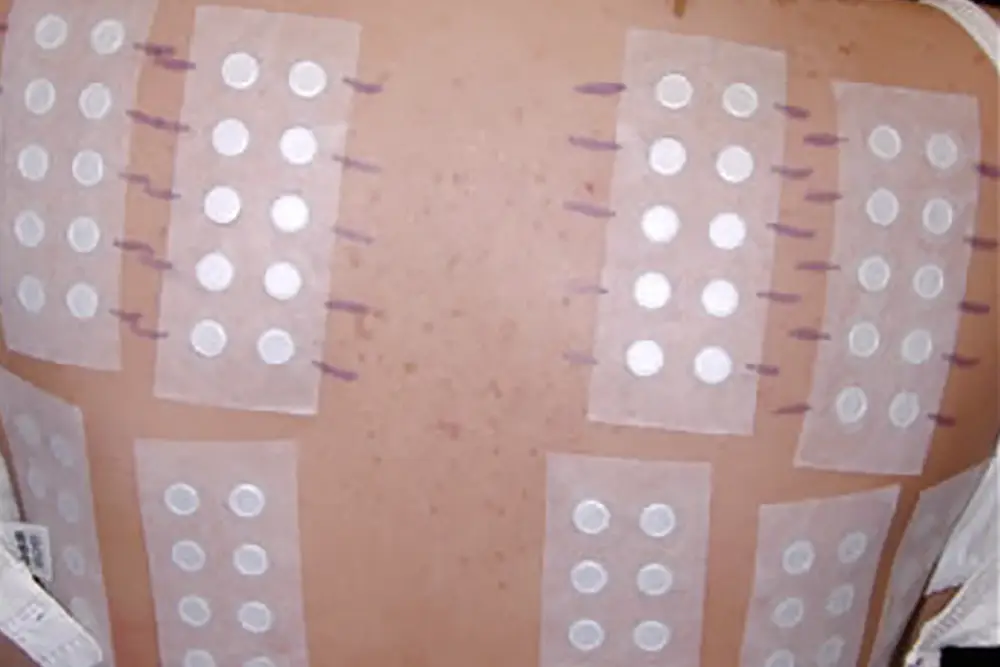
During the test, we apply three trays, each with a number of separate chambers, containing a single allergen, which are then placed on your back and left in place for 48 hours. After this period, we remove the patches, and observe the skin for any reactions. We then wait a further two days for the final and most important review with the consultant, which normally takes place as part of a routine follow up.
Why is it important?
By pinpointing potential triggers through patch tests, you can avoid substances that exacerbate their symptoms, leading to healthier, more comfortable skin. It allows you to make informed choices about the products and environments you interact with, improving your long-term skin health and quality of life.
What conditions does patch testing help with?
We mainly use patch testing to help diagnose and manage conditions caused by skin allergies, especially contact dermatitis. This occurs when the immune system reacts to certain allergens that come into contact with the skin, leading to inflammation, itching, and redness.
Patch testing is valuable for individuals with chronic or recurring skin issues that don't respond to general treatments, as it identifies specific triggers responsible for these reactions.
Patch testing can be beneficial for managing:
Eczema
Patch testing can help identify eczema exacerbated by contact allergies.
Hand Eczema
Stubborn hand eczema can benefit from patch testing to rule out allergic triggers, which can include rubber chemicals found in gloves.
Facial Eczema
Patch testing can help identify preservatives, metals or other ingredients that may be contributing to persistent facial or eyelid eczema.
When should I consider a patch test?
You should consider a patch test if you experience persistent or recurring skin issues that don't respond to standard treatments, especially if these symptoms include redness, itching, or blistering that appears after contact with certain products or environments. Patch testing can be particularly helpful if you have unexplained rashes or irritation that seem to worsen with exposure to everyday items, such as cosmetics, jewellery, or cleaning products.
We also recommend patch testing if you have a chronic condition like eczema or dermatitis, as identifying and avoiding allergens can make a significant difference in managing symptoms effectively.
Our patch testing process
At Experts in Skin & Hair, here's our general process for conducting patch tests and analysing any allergens affecting your skin:
Initial consultation
We will first need to discuss your symptoms during an in-depth consultation, where we assess your symptoms, medical history, lifestyle, and any potential triggers. This helps us select the most relevant allergens to test for, ensuring a targeted approach.
Applying the patch
Next, we will apply small trays containing a variety of allergens to your back. These patches remain in place for approximately 2 days, during which you should avoid showering and any movement that could dislodge them. You should also avoid taking antihistamines.
First reading
After 2 days, we will remove your patches and examine your skin for any early signs of reaction, which may include redness, swelling, or itching.
Second reading
A second reading is performed 2 days after the initial reading and 4 days after the patches are applied. This is the most important step and allows us to detect delayed eczema reactions that are characteristic of contact dermatitis.
Results and guidance
Once the readings are complete, we review your results with you, identifying any allergens that triggered a reaction and their relevance to you and the skin problems you have had. We'll discuss avoidance strategies and adjustments you may need to make to avoid exacerbating your skin further.
Patch testing tips
After application of the patches, we recommend a few essential tips to help protect your skin and ensure accurate results:
- •Avoid washing or scrubbing the test area
- •Keep the area dry and avoid sweating
- •Wear loose, comfortable clothing
- •Avoid direct sunlight on the test area
- •Do not scratch or rub the test area
- •Avoid taking antihistamine