
Scalp Biopsy
Scalp biopsies allow us to precisely diagnose hair loss and scalp issues, assisting with effective treatment planning and personalised care.
Book an appointmentAccreditations & memberships
Our consultants are members of leading UK and international dermatology and hair specialist bodies.

- Royal College of Physicians
- European Hair Research Society (EHRS)
- British Association of Dermatologists
- British Hair & Nail Society
- American Academy of Dermatology Association (AAD)
- European Academy of Dermatology & Venereology (EADV)
What is a scalp biopsy?
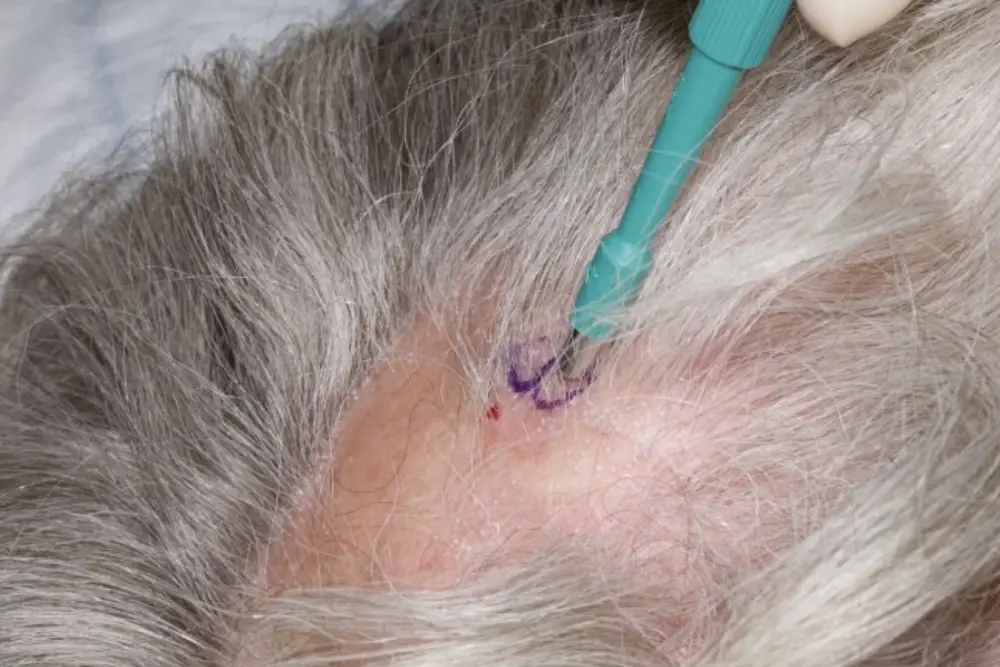
A scalp biopsy is a minor surgical procedure we use to collect a couple of core samples of scalp skin, including hair follicles, to help diagnose various hair and scalp conditions. We carefully analyse this sample under a microscope to identify any abnormalities, inflammation, or disease that could be affecting your scalp health or hair growth.
Why are scalp biopsies important?
Scalp biopsies are a valuable tool in diagnosing causes of unexplained hair loss, scarring, and other chronic scalp issues. In turn, this allows us to create a more targeted and effective treatment plan for you.
Common hair conditions we diagnose through scalp biopsies
A scalp biopsy can help diagnose a range of hair and scalp conditions, including:
Alopecia Areata
An autoimmune condition causing patchy hair loss.
Androgenetic Alopecia
Also known as male or female pattern baldness.
Scarring Alopecias
Including lichen planopilaris and frontal fibrosing alopecia, where hair loss is accompanied by scarring.
Psoriasis & Seb. Dermatitis
Inflammatory scalp conditions that can lead to scaling, redness, and hair thinning.
Fungal Infections
Such as tinea capitis, a fungal infection of the scalp that can cause hair loss and inflammation.
Folliculitis
Inflammation of the hair follicles that can result in irritation and hair shedding.
What are the different types of scalp biopsies?
Scalp biopsies are similar to biopsies of the skin but there are specific techniques that differ such as the angle of biopsy, the choice of location, the need for comparison with an unaffected area or the way that the biopsy will be processed in a laboratory to give maximum information. We typically will use two 4mm punch biopsies from the edge of an affected area that are processed horizontally and vertically in the lab so we can see any significant changes at all levels and in all follicles in the sample.
Our scalp biopsy process
Here's a general overview of our scalp biopsy procedure:
Initial consultation
We will first discuss your concerns during the initial consultation, assessing the area of concern and determine the best type of biopsy for your condition. We will also give you instructions on how to prepare and what to expect.
Preparing for the biopsy
At a second meeting, we will conduct the biopsy. Before the biopsy begins, we will inject a local anaesthetic to numb the area. This ensures that you remain comfortable and pain-free during the procedure.
The biopsy
Next, we will move forward with the procedure. This will differ depending on the biopsy we have chosen, however all will involve removing a sample of tissue from your scalp.
Wound care
After the biopsy is complete, we will cauterise any small bleeding vessels and suture the skin with several sutures that will need to be removed after 10 days. We will use a liquid spray dressing over the wound site.
Results and follow-up
Once we have examined the results in the lab, we will schedule a follow-up appointment to discuss the results and next steps.
Aftercare
After a scalp biopsy, we recommend following these tips to ensure the wound heals and to minimise the risk of infection:
- •Keep the area clean and dry on the evening after the procedure and avoid bending over
- •You can gently wash the area the next day but make sure you remove all shampoo well and pat the area dry
- •Avoid scratching or picking the wound
- •Avoid sun exposure
- •Limit physical activity and sweating for the first couple of days
- •Keep an eye on stitches (if applicable)