
Pattern Hair Loss Explained: Causes, Diagnosis and Treatment Options
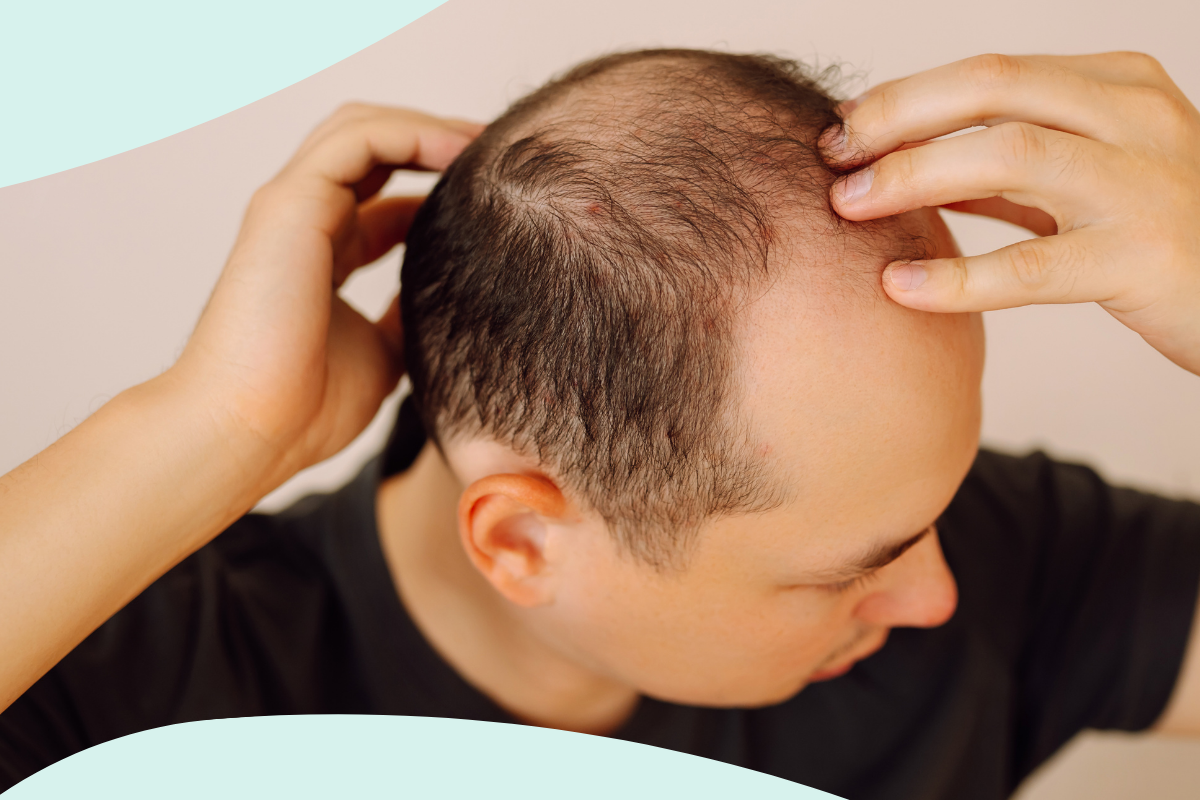
Pattern hair loss explained: Androgenetic alopecia in men and women
Pattern hair loss refers to progressive thinning of the hair in certain areas on the scalp associated with aging, with a high genetic influence. It can affect men and women and it can start as early as the teenage years. There are lots of different genes involved in pattern hair loss and we don't fully understand these in men and women. In men, the most important driver is a hormone called dihydrotestosterone (DHT), which is made from testosterone by an enzyme called 5⍺ reductase. This accounts for the majority of men going thin with age, with generally increased sensitivity to this hormone rather than actual excessive amounts of it in the blood. We really don't understand female pattern hair loss to the same degree and these male hormones are maybe of less relevance, but can be relevant to some.
The science of pattern hair loss: what's actually happening to the follicle
Under genetic influence and the increased sensitivity to hormones like DHT, or diminishing levels of oestrogens, the actual end result is the same in men and women. The hair follicle, which is a tube-like structure that grows the hair, becomes thinner and shorter as we age. Thick hair follicles in healthy adults extend deeply into the dermis or subcutaneous fat of your skin and they are usually arranged in groups of three or four or more hairs on the top of the head. Hair follicles are connected together and may share features such as the arrector pile muscle. Once a hair follicle becomes smaller, it may become dissociated from the other hair follicles in the group and this may be the point of no return where treatments no longer can reverse the situation. The hair follicle will grow a hair for several years, but under the influence of these genes and age, the hair cycle in affected follicles becomes shorter. This results in the hair follicle being more shallow in the skin and thinner in diameter and the end result is a thinner hair fibre. As the hair passes through each successive cycle, this thinning gets worse and this is known as miniaturisation. Miniaturisation and the decreased number of hairs in each follicular unit are the hallmarks of pattern hair loss in both men and women.
Presentation
Male pattern hair loss: recognising the stages
In men, the most common first sign of pattern hair loss is bitemporal recession along the hair line. This is where the hair line goes backwards on either side. This is usually associated with thinning over the crown and then as this becomes more extensive these areas join up. This usually leaves relatively normal density hair around the sides and the back, as these areas are not under the same hormone influence. There are various classifications that can help your doctor determine the extent, with earlier presentations being the one where stabilisation is easier to achieve.
Female pattern hair loss: how it looks different from the male pattern
Women tend to have a different pattern of hair loss with preservation of the frontal hairline hairs, but then a much more diffuse thinning over the top of the head known as the vertex. This is usually incomplete loss in comparison to men, but the area is often quite wide, making it very hard to cover up. There are other patterns that we frequently see in women and it may just present with widening of the part line. Sometimes this is more pronounced behind the frontal hairline or in front of the crown, and this is known as the Christmas tree pattern or inverse Christmas tree pattern. Female pattern hair loss can become much more pronounced in the perimenopausal or postmenopausal years, or sometimes can be a feature of other conditions like polycystic ovarian syndrome, now known as polyendocrine metabolic ovarian syndrome.
Is it pattern hair loss? Or something else: differentiating from telogen effluvium and alopecia areata
Pattern hair loss is usually fairly obvious clinically because of the very frequent patterns of hair loss, but there are mimickers and sometimes patients can go through a global hair shedding or telogen effluvium and that can unmask a tendency to pattern hair loss that they may not have been aware of for many years to come. Any element that is due to a hair cycle disturbance has the ability to recover. Alopecia areata can be diffuse, picking off individual hairs rather than causing bald spots and sometimes can mimic pattern hair loss.
Dermoscopy of the hair fibres can be very useful to distinguish between the different conditions. It's important to realise that pattern hair loss is very common, and therefore other conditions can coexist at the same time, such as telogen effluvium and alopecia areata, therefore a good clinical history and examination with dermoscopy is essential to making sure the treatment is correct.
Pathology and causes
Genetics, hormones, and hair follicles: what drives pattern hair loss?
As mentioned above, pattern hair loss is usually genetically determined, but it can be inherited from either side of the family. There are many different genes involved on different chromosomes, some of which will lead to increased sensitivity to DHT, whilst others might lead to increased receptors called androgen receptors within the hair follicle bulb. You can get pattern hair loss without any family history, or it can skip a generation. Genetic testing of causes is not part of routine practice and we still do not understand all of the different genes and how they influence the hormones and hair follicles in men or women.
Does pattern hair loss get worse over time? Understanding progression and follicular miniaturisation
The shrinking of the follicle occurs as each follicle passes through its hair cycle. The hair cycle gets shorter in pattern hair loss,and then the next cycle will be shorter still. This means that there is progressive shrinking of the hair follicle, so it extends less deeply into the skin and has a smaller diameter, meaning it grows a finer hair. Each subsequent hair cycle, if left untreated, will cause a thinner hair. Treatments can stop this progression, especially those that influence DHT production and the negative impact that DHT has on the hair follicle.
Investigations: diagnosing pattern hair loss — what happens at a specialist consultation?
The clinical presentation of pattern hair loss can be fairly straightforward. The classical patterns of bitemporal recession or thinning over the crown or top of the head will point to this particular diagnosis. When examining the hair at high magnification, such as 40x or 50x, you can really appreciate the variation in the hair fibre diameter and how hairs are arranged in their follicular units. We use the Tricolab Studio so that our patients can visualise this and we have specialist software that will actually calculate the diameter of the hairs so that we can see the percentage of vellus-like hairs, which are very small hairs, less than 30 microns in diameter. It also calculates how many hairs there are in the different size groups. In pattern hair loss, what you tend to find is a high number of vellus-like hairs, but also quite a lot of variation. The software will also calculate the number of hairs growing in each follicular unit and on the top of the head, there should be a majority of hairs growing in groups of three or four hairs. What we tend to see in patients with pattern hair loss are much greater number of hairs growing as single hairs or small groups of two hairs. We'll often do the same examination at the back of the head in an area that is not under hormone control and then you can really appreciate the contrast between an unaffected area and the area of concern.
Medical treatments
Topical and oral treatments for pattern hair loss: what the evidence shows
The only truly evidence-based treatments for pattern hair loss in men is topical minoxidil and oral finasteride. Minoxidil is a hair growth stimulant that prolongs the anagen growth phase. It's often quoted that this is through dilating blood vessels, but this is not correct and the mechanism of action is not truly worked out. In recent years, there has been a trend to prescribing low dose oral minoxidil in tablet form for men and women. This has the potential to cause side effects on the rest of the body, such as light headedness or dizzy spells or unwanted hair growth at other sites, but it does overcome some of the limitations of topical minoxidil. Topical minoxidil requires activation in the skin via a particular enzyme and some people are deficient in that enzyme and therefore are poor responders to topical minoxidil. Roughly 1 in 5 fall into this category.
Finasteride is a different type of medicine called a 5⍺ reductase inhibitor and this works by stopping the conversion of testosterone to dihydrotestosterone, which is responsible for the miniaturisation of the hair follicle. The clinical trials were of a 1 mg tablet dose, but some people will use a lower dose or prefer to have this made up into a topical lotion to avoid any potential side effects. It's worth noting that finasteride is available at 5x the strength for men with enlarged prostate glands and therefore the 1 mg dose is actually very low. It is not taking away testosterone and in fact your testosterone level may temporarily go up. Many tissues in the body are testosterone sensitive and only a few are DHT sensitive, such as the prostate gland and the hair follicle. It is usually incredibly well tolerated with very few side effects in the majority of patients. We always warn patients about a very small chance of sexual side effects, such as decreased sex drive or libido. In my practice, it's very uncommon to experience this and side effects like impotence are even more rare. Any drug, though, can cause side effect and there have been concerns about these medications, and one has to be very careful about reading unverified reports of side effects on the internet or social media.
Finasteride and dutasteride: benefits, risks and common concerns
Dutasteride is the sister drug of finasteride. It is more potent and blocks two isoenzymes of 5⍺ reductase and causes greater DHT suppression. That may point to a more potent treatment and in certain countries around the world, it's first line over finasteride. It is worth noting that this is not licensed for male pattern hair loss and dutasteride is a drug that has a much longer half-life, which means it stays in your system for a lot longer. That also means that if you do experience a side effect, it's going to take longer to get out of your system. Because it has a long half-life, dutasteride can be injected or given in other formulations that mean that it is less likely to have side effects on the rest of the body.
What is post-finasteride syndrome and how common is it really?
If you do look at the internet, you will come across something called post-finasteride syndrome. There are various websites that will talk about this in great detail and a community of people that are thought to be suffering with it. Effectively, it is people that have long-term side effects that are usually sexual or mood related even after stopping their medication. This doesn't make an awful lot of biological sense and as mentioned above, this drug is used at much higher doses in a huge population of men with prostate disease without similar side effects. It is not uncommon in men with pattern hair loss to have other impacts on their physical and mental health and this also needs to be considered. In our practice, we have never had a case of a man having long-term side effects after stopping any treatment and generally patients come back for their follow-up and tell us that they're not aware that they're taking any medication in terms of any side effects. There is a real concern that overly focusing on potential side effects can almost will them into being, a phenomen known as the “nocebo” effect. It is for this reason that it is important to reassure patients and counsel them about following online influences or looking up these drugs on the internet because of the mixed messaging and alarmist nature of many of these articles. There are times when we have patients who are incredibly concerned about potential side effects and in that situation treatment can be tailored to a form that is less likely to have them, such as topical lotions or injection-based therapies or combinations with other treatments.
Oral minoxidil for hair loss: the new standard for pattern hair loss?
Minoxidil was originally a blood pressure treatment and patients experienced unwanted hair growth. It was then turned into a lotion to capitalise on this side effect and then into a foam and now we have gone a full 360 and gone back to using very low doses of the tablet. Most women start on 1/8 of the normal blood pressure dose, and most men start on a 1/4 or 1/2 of the blood pressure dose. Blood pressure related side effects are possible but not that common and these include headache, light headedness, dizzy spells or ankle swelling. Unwanted hair growth at other sites is the main side effect, but is usually only an issue for women and most patients will manage this side effect rather than stop the treatment. There is no doubt that there is a convenience factor to taking a very small tablet on a daily basis rather than applying a lotion or foam and this is especially useful if there's any scalp problems, such as eczema or psoriasis. There have been lots of long-term safety studies that have concluded that low dose oral minoxidil is incredibly safe and it is now widely used in hair loss clinics.
Physical and procedural therapies
Platelet rich plasma for hair loss — what is it and what the evidence says.
Platelet rich plasma is a process where you have a blood draw and the blood is spun in a centrifuge to isolate the different cells in your blood. Red blood cells and white blood cells are generally discarded, leaving the platelets and the fluid called plasma. The platelets contain a cocktail of growth factors, and it is these growth factors being injected around the hair follicles that causes hair growth. If you look at the literature of PRP, it is fair to say that this is fairly mixed, but most experts do believe there is evidence of growth potential. The reason the literature is mixed is there is no standardisation for the preparation of PRP, how frequently it's delivered, and how patients are monitored. It is often used in conjunction with other medical therapies, making interpretation of the results of PRP more difficult. There are some fundamentals about PRP that I think are important. Essentially, you want to get a high platelet concentration and enough volume to be able to inject it in the affected area, and this requires around 6 to 8 mls of platelets being injected. To achieve that amount with sufficient concentration, you have to take quite a lot of blood in the first place, usually around 40 ml as a minimum. You also have to prepare it in a way that not only gets rid of the red blood cells and white blood cells, which all of the PRP setups do, but you also need to get rid of the fluid so that you can concentrate the platelets themselves. This requires a double stage process and actually very few clinics offer this because it is much more time consuming. It often requires more consumables, which means that the clinic costs are considerably higher and therefore they have to charge patients more. Most patients are very price sensitive and therefore, because they don't appreciate the difference between different types of PRP, will choose the cheapest option. There have been reviews of single spin processing compared to double spin processing with conflicting results, but from the biological point of view, it is incredibly logical that you need a high concentration of platelets and enough volume, and therefore, from a scientific point of view, the double spin high volume process makes most sense, and that is what we principally offer in our clinic.
Latest advances in PRP use light and temperature to further enhance the biological activity of the PRP. Red light and cooling the preparation to 4C, enhances the activity of the PRP 2-3x. If you take some of the PRP and heat it and expose to blue light you can release Exosomes from your own blood. Exosomes are small particles excreted from cells that contain messaging material that can lead to regeneration of tissue. There is a lot of interest in Exosomes being used in the treatment of pattern hair loss. Exosomes derived from your own blood are known as autologous exosomes and are safe to inject. All other types of exosomes from plants and animals are banned from being injected in the UK, EU and USA.
Microneedling for hair loss: does it really boost regrowth?
Microneedling is where an injury is inflicted on the scalp to a certain depth to initiate a wound healing response. In a wound healing environment, the hair follicle growth is switched on and therefore by microneedling the scalp to a sufficient depth, you can initiate hair growth. Microneedling can be combined with PRP so that you initiate a wound healing response and hair growth and then provide the growth factors, and this probably provides the best outcomes. It is not entirely clear how deep the wound has to be, but probably this needs to be at least 0.75 to 1.5 mm, and this is not something you will be able to achieve at home with a home use roller or stamper. This depth is painful and can cause bleeding and therefore should be performed in a clinic in sterile conditions with appropriate anaesthetic.
Red light therapy (low level laser therapy) for pattern hair loss.
There's a lot of interest in the use of coloured light for its biological actions in the skin. This is used in red light masks for photorejuvenation and has been used now for more than fifteen years to try and stimulate hair growth. Red light works by switching on the mitochondria, which are the energy part of your cells, and it is logical that if a hair follicle matrix cell has more energy, it will produce a thicker, better hair fibre. Red light therapy can be delivered in a clinic using high energy devices, but there are lots of home use devices. The red light has to penetrate deeply through the skin to reach the deeper parts of the hair follicle and therefore if you've got considerable hair coverage, the hair may get in the way. They come in lots of different types, from combs to bands to caps, often with varying amounts of laser devices in them. The higher the energy and the higher the number of lasers, probably the better they will work, but there are very little studies that show the differences between devices. They are additive to medical therapy, but I would rarely rely on them on their own.
Combining treatments: can PRP, microneedling, and medical therapy work together?
The management of pattern hair loss has always been best approached from different directions and finasteride and minoxidil have frequently been combined for best results from a medical point of view. PRP, microneedling, laser, and other treatments are additive to the medical therapy but can offer more. It sometimes can be very difficult to interpret which treatment is having the extra benefit and therefore it's sensible to introduce things at stages. In our practice we will often establish patients on medical therapy first for 6 to 12 months and only if we're not getting sufficient results will we look at adding in physical therapies and combining them or doing them separately depending on what is appropriate for that individual patient.
We sometimes use a medical tattoo and a density measurement at the start of any physical therapy and repeat it after 6 to 12 months so that we can really make an informed decision about whether they are adding anything extra and worth continuing with in the longer term. All physical therapies have a time and financial commitment and this is really important when working with patients about what is feasible. When physical therapies are supporting medical therapy after the first six months, it is perfectly reasonable for these to be decreased in frequency and maintained every 3 to 6 months to make it much more manageable for the patient.
What is Tricopat and how does it fit into hair loss treatment?
Tricopat is a medical device that has two stages. The first stage is a patting technique using synthetic growth factors, which creates a micro-injury on the scalp. The second stage is the use of an electrical current called iontophoresis to force that synthetic growth factor gel through the micro-injuries. This is used as a treatment for pattern hair loss and has similarities with PRP, but without the need for actual injections, as it is using a synthetic growth factor gel rather than your blood; you also don't need to have a blood draw. So, for people that are hard to bleed or have a needle phobia, this is a better option. It's often generally cheaper than PRP, making it more sustainable in the long term.
Decision making and realistic expectations
Building a personalised pattern hair loss treatment plan
As you can see, there are numerous options for managing pattern hair loss. The key approach is to tailor the plan for the individual patient. In younger patients, there may be a reluctance to use tablet-based therapy and therefore we might get specially made up lotions or foams with combinations of treatment like minoxidil and finasteride as a way of limiting any potential side effects. However, we know that compliance to using a topical treatment on a daily basis can be challenging, and therefore there is often an argument to use the tablet forms of minoxidil and finasteride or dutasteride, as it is really important that these treatments are used regularly without breaks in the long term.
Physical therapy has come down to what is acceptable to the patient, what they can tolerate and afford and making sure that you design something that is sustainable in the longer term. Having a one off expensive treatment is going to do you absolutely no good if you cannot repeat it at the appropriate intervals.
At Experts in Skin and Hair, we pride ourselves on spending the time to understand our patients and to make sure we offer a treatment plan that is appropriate for their stage of hair loss and can be maintained in the longer term. Patients will often be reviewed after six months of the first treatment option and then annually for a check up unless they are undergoing physical based therapies on a more frequent basis. If you're struggling with hair loss, get in touch, and we'd be more than happy to see you and help you manage this condition.
Struggling with thinning hair?
Our specialists can help you understand what's driving your hair loss and build a treatment plan that actually works for you.